
Sony RX1Riii… The most expensive camera I've used. It probably shouldn't be.
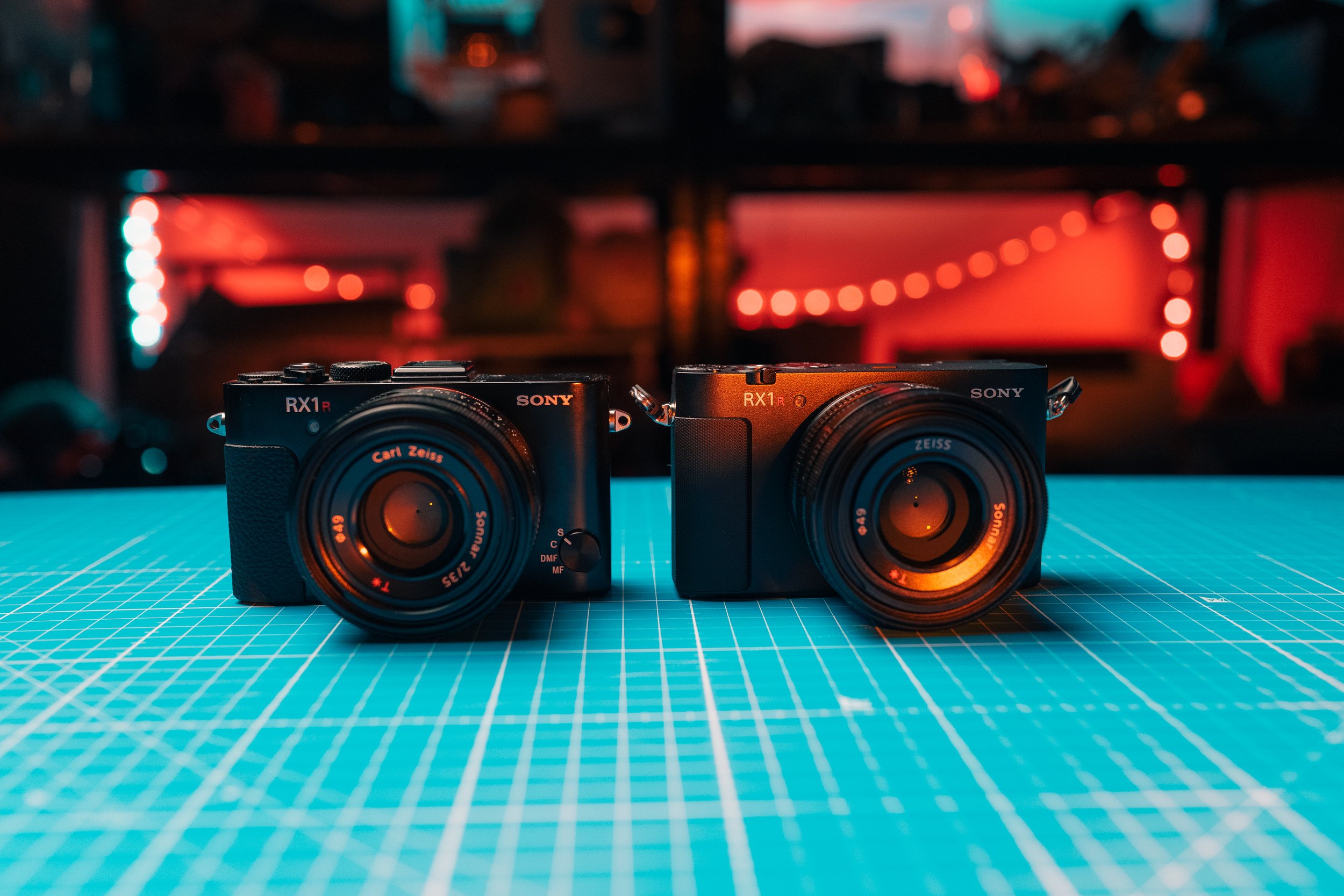
I've been using the Sony RX1R Mark III for a little while now and I keep coming back to the same thought. There are no bad cameras anymore, but maybe there are still bad value cameras. Let's investigate.
The RX line is a firm favourite of a certain kind of photographer. It is absolutely tiny, full frame, with a fixed 35mm f2 lens. The form factor is genuinely impressive. But here's the thing: this camera costs around £4,000. That means you could buy a Lumix S1Rii with a stock lens and still have £500 left over, or three of the top everyday carry cameras and a holiday. Lofty expectations, then.

What's new (and what's stubbornly not)
Compared to the RX1R Mark II from 2015(!), there are some genuinely good upgrades, a few baffling decisions, and a whole lot that's just stayed the same. If you're a loyal RX1 fan, I think you'd feel a bit hard done by after a ten-year wait.
The things that haven't changed are probably the most frustrating. None of the RX line have ever been weather sealed — still not. And they all use the same 35mm f2 lens that came on the original RX1 back in 2012. That lens has a lovely mechanical leaf shutter inside it, but it also has old focus motors, soft edges, and absolutely no optical stabilisation. And not one single tweak or improvement in 10 plus years. There's no in-body stabilisation either. Zero. On a 60 megapixel, full frame sensor.
In practice that means anything around 1/50th of a second or slower is basically unusable hand-held. Coming from my everyday carry — the OM System OM-3, which can do six full seconds hand-held — this feels extraordinarily limiting. I love doing little handheld long exposures when I'm out and about, and it's simply off the table here without a tripod. And, ya, know. for the price!!

The things that surprised me
The EVF "upgrade" is a head-scratcher. It no longer pops up, and the tilting screen has gone entirely. I personally much preferred the Mark II for those two features. Losing them feels like a backwards step. I shot some gig photography with both versions and having a flippy screen to get into different angles was genuinely useful in comparison.
And here's a fun fact: the Mark III has the same 2.36 million dot EVF resolution as the Mark II. Which was impressive in 2015. At 4 grand in 2026, it feels a bit eh. When the OM System OM-3 launched with the same viewfinder resolution, there was outrage in the micro four thirds community. The OM-3 costs about a quarter of this Sony. Make of that what you will.
What is great: Sony's updated menus (blessedly much improved), a touchscreen (finally), and the latest Sony autofocus and subject detection, which is genuinely superb even in tricky lighting. And that 60 megapixel sensor is just stupidly good. I'd be in Lightroom going "I wish I could get a bit closer" then hit crop and realise I was already zoomed way in and it looked fantastic. The crop-to-focal-length feature is brilliant, and the crop metadata carries over to your computer.

The real world experience
The out-of-camera JPEGs look stunning. I used Film 3 with added contrast for most of my shots, and for an everyday carry camera you could get genuinely lovely results without any additional editing. The image quality overall is great… but here's the crux of it: All cameras have great image quality now. The improvement between this and a micro four thirds camera is genuinely tiny, and the price difference is enormous.
The old lens is the biggest handicap. It’s soft at the edges, has noticeable chromatic aberration (even with in-camera correction applied), and a focus motor that sounds frankly ancient. In the centre of the frame it's sharp as a tack. But at £4,000 there's no justification for a 2012 lens.
It doesn't go in my pocket either — where the Canon Powershot V1, which costs a fraction of the price, absolutely does. If it's living on a camera strap or in a bag anyway, comfort and grip become a lot more relevant.

The alternatives worth knowing about
At this price, the RX1Riii makes several other cameras look like exceptional value. The Fujifilm X100VI is the obvious one — also a 35mm fixed lens, but it has IBIS, built-in ND filters, better video, better JPEG customisation, a flip screen, a far more modern viewfinder, and it costs a third of the price. It's not even close. I’d pick the Fuji any day of the week, and in some ways THAT camera could be considered pricy!
If you're committed to full frame fixed lens and have deep pockets, the Leica Q3 is £6,000 but it's fully weather sealed, has 5-axis IBIS, the same 60MP sensor, a tilting screen, a much better EVF, and a faster f1.7 lens. It makes the Sony look oddly middling.
And my own daily choice, the OM System OM-3, is a quarter of the price. Smaller sensor, yes, but fully weather sealed, incredible IBIS, 4K 60p video, interchangeable lenses, the same EVF resolution as the Sony, and a flippy screen. There are no bad cameras anymore, as I keep saying.
You can find used copies of any of these on MPB: MPB UK | MPB US | MPB EU.
Three types of cameras
I've been thinking about this and I reckon cameras fall into roughly three categories.
First, cameras as tools. Maximum spec for price, like my full frame Lumix cameras. Second, cameras that offer both experience and value, like the OM-3 or the Fujifilm X100VI: Style, specification, professional results. Fun to use without sacrificing performance.
And the third: experience-only cameras. Things like the Fujifilm X Half, manual Leica cameras, the Sigma BF, or a little Kodak Charmera. Cameras where you objectively don't get the most for your money, but you get a particular feeling. Like a fast car. Entirely valid — just be honest with yourself about which category you're buying into.
The Sony RX1Riii is an experience camera in my opinion. Too much spec has been sacrificed at the Full Frame altar for my liking. You have to sacrifice just about everything to get a full frame sensor. and then what? You stick an ancient f2 lens on it that won’t show off the full frame goodness anyway. I just don’t get it.
Sensor size isn’t that important to me, but clearly it must be to some people. It may just not be for me, and that’s fine. It is a beautiful camera, and playing with 60 megapixels is genuinely extraordinary, and if this form factor inspires you and the premium feel speaks to you, you will love it. But there is not a chance in hell I would personally pay what this camera goes for. I am, at heart, a woman who wants style, spec, and value — all three at once. The RX1Riii only really delivers one of those.
The verdict
Catnip for sensor snobs.
Bonkers priced, with a great sensor hamstrung by a 2012 lens, no IBIS, no weather sealing, and a screen that now tilts less than its predecessor. For certain people, it will be everything. For most people, the Fujifilm X100VI or the OM-3 will be everything — and leave a significant amount of money left in your pocket.
But as always, this is just one gal's opinion. For the full video version with samples, watch it here on YouTube.